Showing posts with label Ruben. Show all posts

Monday, 30 May 2016

Fartalez del cerro


Fortaleza del Cerro, also known as Fortaleza General Artigas, is a fortress situated in Montevideo, Uruguay overlooking the Bay of Montevideo. It belongs to the barrio of Casabó, at the west of Villa del Cerro. It holds a dominant position on the highest hill of the department of Montevideo (popularly known as Cerro de Montevideo with its altitude of 134 meters above sea level the sea, on the opposite side of the bay.Its function was to defend the population of Montevideo and its port, on the río de la Plata. Governor Francisco Javier de Elío ordered construction in 1809 and it was completed in 1839;this was the last Spanish fort built in Uruguay. It has housed the Military Museum since 1916.
Source:Wikipedia

Thanks very much to Ruben for this surprise card!
Sent: 6 June 2014   Received: 1 July 2014   Travelled: 25 days

Saturday, 28 May 2016

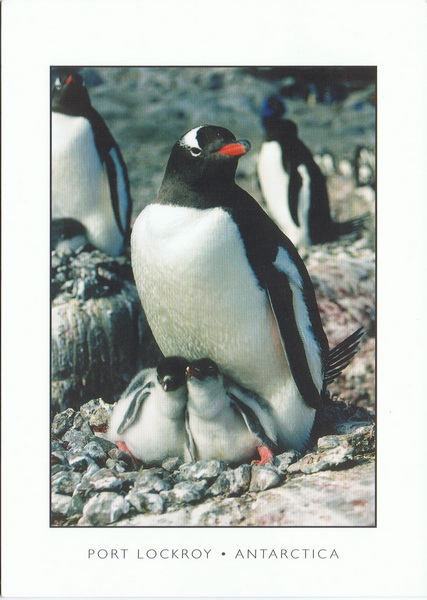
Antartica


Boo! back again from my short hiatus, have been watching a Chinese historical
drama and sometimes my eyes feel too strained to continue working on the laptop
after work. Now I'm back to my original intent which was to blog the postcards from
2014. Antartica came as a huge surprise from Ruben who sends this via
the United Kingdom Antartic Heritage Trust,UKAHT. Thank you very much Ruben
In fact I totally forgot about this card until I went through the box hiding my 2014 cards,
so I was even more amazed that I have an Antartica card sent from Port Lockroy. I have
a few other Antartica cards sent from NZ base, French Antartica and the USA
Fort McMurdo :D Thanks so much Ruben!
Sent: 12 November 2014   Received: 16 Dec 2014 Travelled: 34 days

Monday, 18 April 2016

Calle de los Suspiros, Uruguay

"La calle de los suspiros" ("Street of Sighs") is a historical street located at Colonia del Sacramento, Uruguay.
The street has been listed as a World Heritage Site by UNESCO in 1995, and it is a living reminder of the times of the colonial age, as it still holds many of this age's architectural features.
"La calle de los suspiros" is known because of mysterious stories well known all over Uruguay.
  • One story states that prisoners convicted to death were taken to that street where they were tied up until they were drowned by the high tide.
  • Another claims that there used to be many brothels and that local sailors sigh for their love.
  • Another story says that once there was a lady in love who was stabbed by an unknown person while she was waiting for her lover, and now haunts the street every fullmoon night.

Source: Wikipedia
Thanks so much to Ruben, who was on a short break to Uruguay, for the
mysterious street card and the amazing Year of Monkey stamp!
Sent: 21 March 2016    Received: 14 April 2016   Travelled: 24 days

Monday, 7 September 2015

Les Eclaireurs lighthouse, Ushuaia

Les Eclaireurs Lighthouse is a slightly conically shaped lighthouse standing on the northeastern-most islet of the five or more Les Eclaireurs islets, which it takes its name from, 5 Nautical mile east of Ushuaia in the Beagle Channel, Tierra del Fuego, southern Argentina. The brick-built tower is 10 metres high and 3 metres  wide at the base, with its windowless wall painted red-white-red and topped by a black lantern housing and gallery. Only a door pointing to the west provides access to the building. The light is 22.5 metres  above sealevel emitting white flashes every ten seconds with a range of 7.5 nautical miles (13.9 km). The lighthouse, still in operation, is remote-controlled, automated, uninhabited, and not open to the public, guarding the sea entrance to Ushuaia. Electricity is supplied by solar-panels. The lighthouse was put into service on December 23, 1920.

It is a popular tourist attraction, reached on short boat tours from Ushuaia. It is known to the Argentines as the Lighthouse at the End of the World (Faro del fin del mundo), although that name is misleading. The lighthouse is often confused with the San Juan de Salvamento lighthouse on the east coast of the remote Isla de los Estados, made famous by Jules Verne in the novel The Lighthouse at the End of the World, which is actually much further east.

Sent: 7 August 2015   Received: 3 September 2015   Travelled: 27 days

Saturday, 28 February 2015

Gaucho

Gaucho is a resident of the South American pampas, Gran Chaco, or Patagonian grasslands, found mainly in Argentina, Uruguay, Paraguay, Southeastern Bolivia, Southern Brazil and Southern Chile. In Brazil, gaúcho is also the main demonym of the people from the state of Rio Grande do Sul. In the Argentine pampas gauchos are the main workers on an estancia. Their duty is to herd cattle all year round. They are excellent horsemen. They also use different types of weapons like the bola and lassos for herding cattle.
Gaucho is an equivalent of the North American "cowboy" (vaquero, in Spanish), the Chilean huaso, the Peruvian chalan, the Cuban guajiro, the Puerto Rican jibaro, the Venezuelan or Colombian llanero, the Ecuadorian chagra and the Mexican charro, which are terms that often connote the 19th century more than the present day; then, gauchos made up the majority of the rural population, herding cattle on the vast estancias, and practicing hunting as their main economic activities.
The Gaucho is a nationalistic symbol in both Argentina and Uruguay. The Gauchos became greatly admired and renowned in legends, folklore and in literature and became an important part of their regional cultural tradition. Beginning late in the 19th century, after the heyday of the gauchos, they were celebrated by South American writers.
Thanks to Ruben for this beautiful postcard of gauchos :)

Tango

Tango is a partner dance that originated in the 1890s along the Río de la Plata, the natural border between Argentina and Uruguay, and soon spread to the rest of the world.
Early tango was known as tango criollo (Creole tango). Today, there are many forms of tango extant. Popularly and among tango dancing circles, the authentic tango is considered to be the one closest to the form originally danced in Argentina and Uruguay.
In 2009, UNESCO approved a joint proposal by Argentina and Uruguay to include the tango in the UNESCO Intangible Cultural Heritage Lists.
Tango is a dance that has influences from European and African culture.Dances from the candombe ceremonies of former slave peoples helped shape the modern day Tango. The dance originated in lower-class districts of Buenos Aires and Montevideo. The music derived from the fusion of various forms of music from Europe. The word "tango" seems to have first been used in connection with the dance in the 1890s, possibly related to the latin word "tangere" but more likely related to the African slave word "tango" (drum or dance place).
Thanks to Ruben for the beautiful tango card!

Ischigualasto Provincial Park,San Juan, Argentina

Ischigualasto Provincial Park , also called Valle de la Luna ("Valley of the Moon", due to its otherworldly appearance), is a provincial protected area in the north-east of San Juan Province, north-western Argentina, limiting to the north with the Talampaya National Park, in La Rioja Province. Both areas belong to the same geological formation, the Ischigualasto Formation (sometimes Ischigualasto-Talampaya Formation) Established on 3 November 1971,the park has an area of 60,370 ha 
In 2000 UNESCO included Ischigualasto and Talampaya National Park among its World Heritage Sites.

Thanks to Ruben for this otherwordly postcard!

Thursday, 26 February 2015

South Georgia


South Georgia and the South Sandwich Islands (SGSSI) is a British overseas territory in the southern Atlantic Ocean. It is a remote and inhospitable collection of islands, consisting of South Georgia and a chain of smaller islands known as the South Sandwich Islands. South Georgia is 167.4 kilometres long and 1.4 to 37 km wide and is by far the largest island in the territory. The South Sandwich Islands lie about 520 kilometres southeast of South Georgia.The total land area of the territory is 3,903 square kilometres.

There is no native population on the islands; the present inhabitants are the British Government Officer, Deputy Postmaster, scientists, and support staff from the British Antarctic Survey who maintain scientific bases at Bird Island and at the capital, King Edward Point, as well as museum staff at nearby Grytviken.

Wow! Another surprise card from a remote corner of the world!
the 160th territory in my postcard collection. Super thanks to Ruben for this postcard!
Sent: 1 January 2015    Received: 26 February 2015   Travelled: 56 days

Wednesday, 21 January 2015

Vicunas


The vicuña is one of two wild South American camelids which live in the high alpine areas of the Andes, the other being the guanaco. It is a relative of the llama, and is now believed to be the wild ancestor of domesticated alpacas, which are raised for their coats. Vicuñas produce small amounts of extremely fine wool, which is very expensive because the animal can only be shorn every three years, and has to be caught from the wild. When knitted together, the product of the vicuña's wool is very soft and warm. The Inca valued vicuñas highly for their wool, and it was against the law for anyone but royalty to wear vicuña garments.

Both under the rule of the Inca and today, vicuñas have been protected by law, but they were heavily hunted in the intervening period. At the time they were declared endangered in 1974, there were only about 6,000 animals left. Today, the vicuña population has recovered to about 350,000,and although conservation organizations have reduced its level of threat classification, they still call for active conservation programs to protect populations from poaching, habitat loss, and other threats.

The vicuña is the national animal of Peru; its emblem is used on the Peruvian coat of arms.

Thank you Ruben for this special treat, another camelid of South America. I never 
heard of a vicuna before.
Sent: 9 December 2014   Received: 20 January 2015   Travelled: 42 days

Llama from Argentina!


Thanks to Ruben for this lovely postcard from Argentina of a llama!

Llamas typically live for 15-25 years, with some individuals surviving 30 years or more.
They are very social animals and live with other llamas as a herd. The wool produced by a llama is very soft and lanolin-free. Llamas are intelligent and can learn simple tasks after a few repetitions. When using a pack, they can carry about 25% to 30% of their body weight for 8–13 km (5–8 miles).
Llamas appear to have originated from the central plains of North America about 40 million years ago. They migrated to South America about three million years ago. By the end of the last ice age (10,000–12,000 years ago), camelids were extinct in North America. As of 2007, there were over seven million llamas and alpacas in South America, and due to importation from South America in the late 20th century, there are now over 158,000 llamas and 100,000 alpacas in the United States and Canada.
Sent: 9 December 2014   Received: 20 January 2015   Travelled: 42 days

Friday, 20 June 2014

Tristan da Cunha

 
Tristan da Cunha colloquially Tristan, is both a remote group of volcanic islands in the south Atlantic Ocean and the main island of that group. It is the most remote inhabited archipelago in the world, lying 2,000 kilometres (1,243 mi) from nearest inhabited land, Saint Helena, 2,400 kilometres (1,491 mi) from the nearest continental land, South Africa, and 3,360 kilometres (2,088 mi) from South America. The territory consists of the main island, also named Tristan da Cunha, along with the smaller, uninhabited Nightingale Islands and the wildlife reserves of Inaccessible and Gough Islands.
Tristan da Cunha is part of the British overseas territory of Saint Helena, Ascension and Tristan da Cunha. The island has a permanent population of 275.
The islands were first sighted in 1506 by Portuguese explorer Tristão da Cunha, although rough seas prevented a landing. He named the main island after himself, Ilha de Tristão da Cunha, which was anglicised from its earliest mention on British Admiralty charts to Tristan da Cunha Island.
 
@.@!!! I'm already blank in thoughts after receiving such great cards
from Belize, Peru and now this! A new country addition to my collection
from one of the remotest places in the world. I also find it rather funny
to receive the Rockhopper penguins (do they walk funny? or is it their stylish crest?!)
because I always think that black and white animals such as Dalmatians, Hertfordshire cows,
pandas , zebras and such are Mother Nature's humourous art creations.
AWESOME STAMPS!
mucho gracias Ruben for this absolutely rare gem!
Sent: 28 May 2014   Received: 20 June 2014   Travelled: 23 days

Sunday, 15 September 2013

Mapuches


Mapuches people from Chile, card sent from Argentina by Ruben.
An indigenous group of inhabitants from South Central Chile and South Western Argentina.
Thank you for the beautiful card, now I owe you one from my travels Ruben ;)

 Sent: 11 May 2013

Arrived: June-Aug 2013